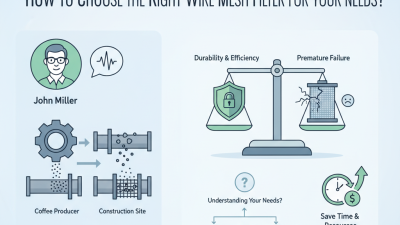

Choosing the right wire mesh filter is not a simple matter of counting openings. Liquid viscosity, particle shape, pressure, temperature, and cleaning method can change the result. A mesh that performs well in a cool water line may clog quickly in a hot oil system. Small details matter.
Dr. David B. Purchas, a respected filtration author and technical specialist, has emphasized a practical principle: “There is no universal filter medium; performance depends on the application.” That idea guides this review of the top 10 types of wire mesh filters. Each design offers a different balance of filtration accuracy, flow capacity, strength, and maintenance needs. Woven wire mesh, Dutch weave, sintered mesh, wedge wire, and multilayer constructions do not solve the same problem. They should not be treated as interchangeable parts.
This guide looks beyond attractive product descriptions. It considers aperture size, wire diameter, open area, material selection, and operating pressure. Stainless steel may resist corrosion, yet it is not automatically the best choice. A finer mesh may capture smaller particles, but it can also increase pressure loss. That trade-off is easy to overlook. Sometimes, the “best” filter is only the least unsuitable option for a difficult process. Real performance also depends on installation quality, inspection, and timely cleaning. The following overview compares ten major wire mesh filter types, helping engineers and buyers make more defensible choices. There is room for judgment. Testing still matters.
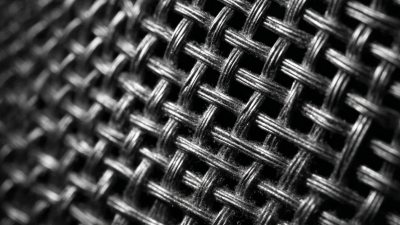
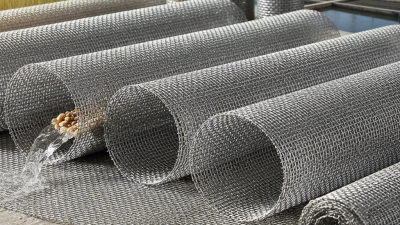
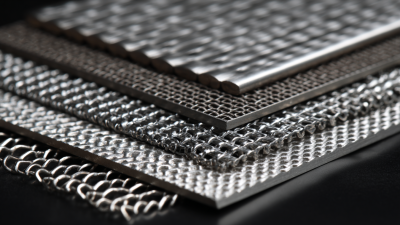
Wire mesh filters are classified by weave, construction, shape, and operating duty. In practical inspections, opening size usually matters first. It controls particle retention and pressure drop. Plain weave uses alternating wires and suits general liquid or air filtration. Twill weave passes wires over two and under two, creating finer openings with better support. Dutch plain weave uses thicker warp wires and tightly packed shute wires. It provides strong retention and stable performance.
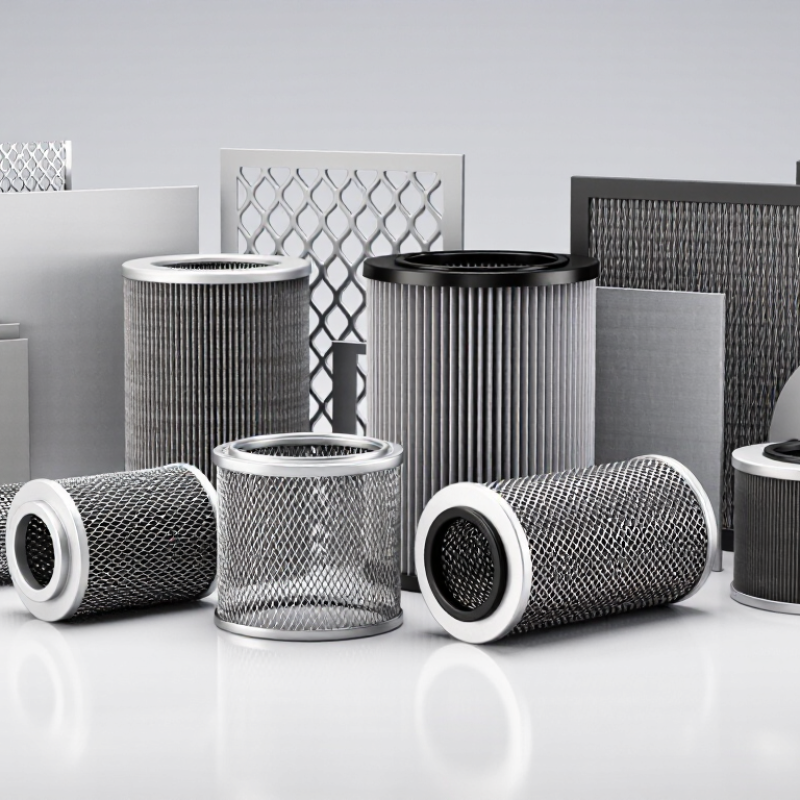
A useful ten-type list includes plain weave, twill weave, Dutch plain, Dutch twill, reverse Dutch, welded mesh, sintered mesh, pleated mesh, cylindrical filters, and basket filters. Dutch twill supports very fine filtration under pressure. Reverse Dutch designs can resist flow-direction stress. Welded mesh handles coarse particles and structural loads. Sintered mesh bonds multiple layers, improving rigidity and cleanability. Pleated mesh adds surface area inside a compact housing. Cylindrical and basket filters describe shape, not necessarily the weave.
The classification labels are not perfectly uniform. Some suppliers mix media type with filter shape, which can confuse purchasing teams. I have seen a “fine filter” clog quickly because its effective area was too small. That failure was not caused by mesh quality alone. Wire diameter, open-area percentage, temperature, fluid viscosity, and cleaning method also deserve review. For abrasive service, thicker wires may last longer. Yet they can reduce flow. Test data is better than a promising catalog phrase.
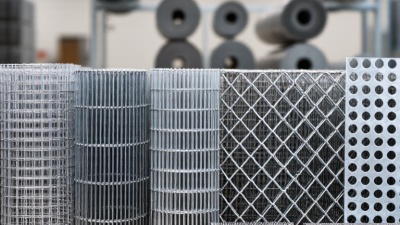
The top 10 types of wire mesh filters serve different flow and separation needs. Square-weave mesh offers predictable openings for general liquid filtration. Twilled-weave mesh holds finer wires and supports higher pressure. Dutch-weave mesh provides strong depth filtration for demanding process lines. Plain-weave mesh remains economical and easy to clean. Welded mesh suits coarse filtration and rigid baskets. Sintered mesh combines several layers into a stable, self-supporting medium. Perforated-backed mesh resists collapse under pressure. Knitted wire mesh handles mist, droplets, and gas-liquid separation. Expanded mesh supports pre-filtration with low resistance. Pleated mesh increases surface area inside compact housings.
The choice depends on particle size, viscosity, temperature, and cleaning method. A 20-micrometre opening does not guarantee 20-micrometre absolute removal. Wire shape, weave depth, and particle loading also matter. ASTM E2016 identifies woven wire specifications and supports clearer purchasing decisions. The Industrial Filtration Market report from MarketsandMarkets estimated the sector at about 45 billion US dollars in 2023, with continued growth projected through 2028. This expansion reflects tighter process control across manufacturing, water treatment, and energy operations.
Field experience often favors layered designs. A coarse welded screen can protect a finer Dutch-weave element. That approach reduces premature blockage. Still, mesh selection is sometimes treated too simply. I have seen nominal ratings compared as if they were identical. They are not. Grand View Research also reports strong growth in filtration demand, driven by cleaner production requirements. Buyers should request test conditions, pressure-drop curves, and cleaning-cycle data before approving a filter.
Wire mesh filters separate particles by forcing fluid through controlled openings. Plain-weave mesh uses crossing wires with square gaps. It suits water lines, air handling, and general dust removal. Twill-weave mesh places each wire over two or more wires, creating stronger, finer filtration. It works well in hydraulic systems and process equipment. Dutch-weave mesh uses thicker warp wires and tightly packed weft wires. It handles high pressure and fine particles. Reverse Dutch weave changes the wire arrangement for improved strength and flow stability. It is common in polymer processing and demanding liquid filtration.
Welded mesh joins wires at every intersection, so it resists vibration and supports coarse filtration. Sintered mesh bonds multiple layers with heat and pressure. Its rigid structure performs reliably in fuel, gas, and chemical service.
Pleated mesh increases the filtration area inside a compact housing. It can extend service intervals, though deep folds may be difficult to clean. Cylindrical mesh filters surround a central support tube. They are practical for pipelines, pumps, and suction systems.
Basket filters collect debris inside a removable metal basket. Operators can lift them out and inspect trapped particles quickly.
Demister mesh uses fine wire layers to remove liquid droplets from gas streams. It appears in separators, ventilation equipment, and vapor control units. Multilayer mesh combines different openings for staged particle capture. This design improves stability when pressure changes frequently.
I have found that wire diameter matters as much as aperture size. Thicker wires improve durability but reduce open area. Cleaning method matters too. Backwashing may protect delicate mesh better than aggressive brushing.
No filter type fits every process. Temperature, viscosity, pressure, particle shape, and maintenance access must be checked before selection. Filters are often chosen too finely. That can increase pressure loss unnecessarily.
When comparing the top 10 wire mesh filter types—plain weave, twill, Dutch weave, welded mesh, perforated mesh, wedge wire, sintered mesh, laminated mesh, knitted mesh, and expanded mesh—performance starts with the process, not the catalog. ASTM E11 provides standardized sieve openings from 125 mm to 20 μm, giving engineers a common reference for aperture size. Yet nominal opening is not actual particle capture. A deformed wire can change the result.
MarketsandMarkets’ 2024 Industrial Filtration Market report estimates the sector at about $39.2 billion in 2024, with growth toward $49.4 billion by 2029. That expansion makes testing discipline more important.
Compare clean pressure drop, particle retention, dirt-holding capacity, bubble-point pressure, tensile strength, corrosion resistance, and cleanability.
ISO 9044:2016 defines technical requirements for industrial woven wire cloth. ASTM F316 can also support bubble-point testing when the pore structure is suitable.
In plant trials, a 40 μm Dutch weave may retain fine particles, but it can restrict flow quickly.
A 100 μm welded screen may reduce pressure loss, yet allow more carryover.
Test both under actual fluid temperature, viscosity, flow rate, and contaminant loading. Clean-water results can mislead.
I have seen a filter pass an opening test, then fail after vibration and repeated cleaning. That weakness deserves attention before purchase.
Selecting the right wire mesh filter starts with the process, not the catalog. Identify the fluid, particle size, flow rate, pressure, temperature, and cleaning method. A plain-weave filter suits many low-pressure liquid applications. Twill weave holds finer particles. Dutch weave supports high-pressure separation. Pleated, disc, basket, cylindrical, sintered, wedge-wire, perforated-support, and multilayer filters cover other operating needs.
Use measured data whenever possible. ISO 9044:2016 defines requirements for industrial woven wire cloth, including aperture and wire diameter tolerances. ASTM E11 provides comparable specifications for test sieves and mesh openings. These details matter because a nominal 100-mesh screen may not provide identical performance across materials. The Filtration and Separation industry outlook from Grand View Research identifies process filtration as a major demand area, driven by stricter water and industrial quality requirements. Yet market growth does not guarantee a correct selection.
Tips: Test the actual fluid. Record pressure drop at the target flow. Check whether particles are soft, sharp, sticky, or magnetic. Stainless steel often improves corrosion resistance, but compatibility must be verified. A finer mesh can increase capture while reducing flow. That trade-off is easy to underestimate. Field experience also shows that a clean filter may perform differently after repeated backwashing. Include a safety margin, but avoid excessive sizing. Oversizing raises cost and can complicate maintenance. Recheck the design after installation. Real conditions are rarely perfect.