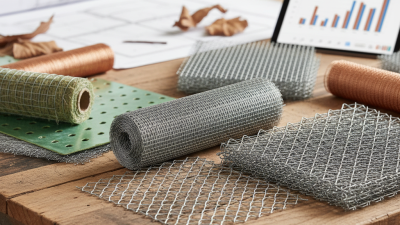

Choosing the right metal mesh begins with understanding its job, not its appearance. A woven wire mesh may screen fine particles, while expanded metal can support walkways, guards, and ventilation panels. Welded mesh offers rigid, square openings for cages, partitions, and reinforcement. Perforated sheet provides controlled airflow, drainage, and sound management. Each type behaves differently under pressure, heat, moisture, and repeated handling.
Materials engineer Dr. George E. Dieter emphasized a practical principle: “Good engineering begins with knowing what the material must do.” That idea fits metal mesh selection closely. Opening size affects filtration and visibility. Wire diameter changes strength and flexibility. Stainless steel resists corrosion near wash-down areas, while galvanized steel may suit sheltered industrial spaces. Aluminum reduces weight, but it may not tolerate every abrasive environment.
There is no perfect mesh. Only a suitable one.
This makes product comparisons less tidy than many buying guides suggest. A fine weave can improve separation, yet it may clog quickly with sticky material. A heavy welded grid can withstand impact, but it may block airflow more than expected. Even finish quality matters. Sharp edges, uneven welds, or inconsistent apertures can create installation problems.
This guide examines the top types of metal mesh, their practical strengths, and their limitations. It also considers real selection details, including load, corrosion exposure, cleaning requirements, and fabrication costs. Some applications need a precise specification. Others need a better conversation between the designer, supplier, and installer. That distinction is easy to miss, but it often determines whether the final mesh performs reliably in the field.
Metal mesh is a manufactured network of wires, strips, or punched sheet openings. It combines controlled gaps with useful strength. Common materials include stainless steel, carbon steel, aluminum, copper, and nickel alloys. The material choice affects corrosion resistance, weight, conductivity, and service temperature.
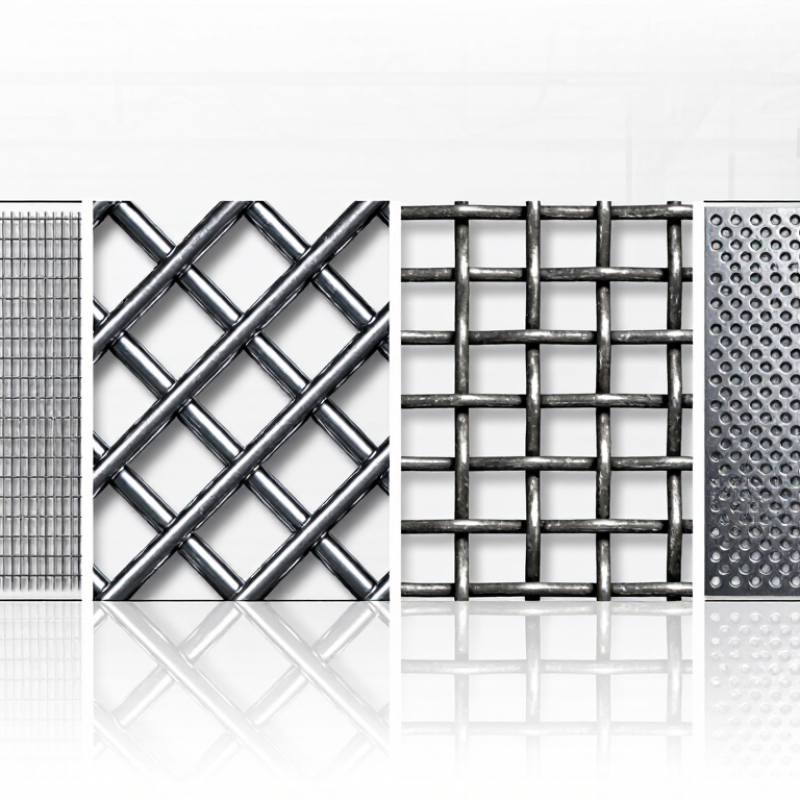
Classification usually begins with the production method. Woven mesh crosses wires over and under one another, like fabric, creating precise square or rectangular openings. Welded mesh joins wires at intersections, producing rigid panels for filtration, guarding, and structural support. Expanded metal stretches slit sheet into diamond-shaped openings, without removing material. Perforated sheet uses punched holes, although some engineers classify it separately. Sintered mesh bonds layered wire cloth through heat and pressure. It provides fine filtration and strong dimensional stability. Not every supplier uses the same categories. That causes avoidable confusion.
Opening size, wire diameter, open area, mesh count, and thickness provide a second classification system. ISO 9044 addresses industrial woven wire cloth, supporting consistent terminology and testing. Grand View Research’s Metal Mesh Market report has projected steady global growth at roughly 4% annually through the decade. MarketsandMarkets has also identified filtration, construction, automotive, and electronics as important demand areas. These figures are useful, but market reports use different definitions. A buyer should verify the test method, aperture tolerance, and alloy grade before comparing quotations. One attractive specification can still fail in a wet, vibrating installation.
| Metal Mesh Type | How It Is Made | Primary Classification | Typical Opening or Pattern | Common Materials | Key Characteristics | Typical Applications |
|---|---|---|---|---|---|---|
| Woven Wire Mesh | Metal wires are interlaced over and under one another using plain, twill, Dutch, or other weaves. | Woven mesh; classified by weave pattern, wire diameter, and mesh count. | Square, rectangular, or specialized openings; mesh count is commonly expressed as openings per linear inch. | Stainless steel, carbon steel, aluminum, copper, brass, and nickel alloys. | Offers accurate openings, good filtration control, and a broad range of wire diameters and mesh counts. | Screening, filtration, sieving, guards, ventilation, and laboratory equipment. |
| Welded Wire Mesh | Longitudinal and transverse wires are joined at their intersections by resistance welding. | Welded mesh; classified by wire diameter, opening size, panel or roll format, and weld spacing. | Usually uniform square or rectangular openings. | Galvanized steel, stainless steel, low-carbon steel, and PVC-coated steel. | Rigid, dimensionally stable, and easy to fabricate; the welded joints provide consistent geometry. | Fencing, machine guards, animal enclosures, storage racks, construction reinforcement, and partitions. |
| Expanded Metal Mesh | A solid metal sheet is simultaneously slit and stretched to form openings without removing material. | Expanded mesh; classified by short way of diamond, long way of diamond, strand width, and sheet thickness. | Diamond, hexagonal, or decorative openings; commonly specified as SWD and LWD. | Carbon steel, stainless steel, aluminum, and galvanized steel. | Provides a high strength-to-weight ratio, slip resistance, airflow, and a continuous, non-raveling surface. | Walkways, platforms, steps, security screens, machine guards, facades, and ceiling panels. |
| Perforated Metal | Round, square, slotted, or custom holes are punched or pressed into sheet or plate. | Perforated sheet; classified by hole shape, hole size, pitch, open area, and sheet thickness. | Round holes are common; staggered or straight-row layouts are available. | Stainless steel, aluminum, carbon steel, galvanized steel, and copper. | Combines controlled airflow, sound or light transmission, screening, and a flat sheet surface. | Acoustic panels, ventilation covers, equipment enclosures, filters, grain screens, and architectural cladding. |
| Knitted Wire Mesh | Metal wire is knitted into interlocking loops, producing a flexible mesh structure. | Knitted mesh; classified by wire diameter, loop geometry, width, and compression form. | Interlocking loop or knitted pattern; it may be supplied flat or compressed into pads. | Stainless steel, copper, aluminum, nickel alloys, and galvanized steel. | Flexible, resilient, compressible, and effective for contact, separation, cushioning, and demisting. | Demister pads, vibration isolation, EMI shielding, sealing, filtration, and exhaust components. |
| Crimped Wire Mesh | Wires are pre-crimped before they are interwoven, creating stable intersections and a regular pattern. | Pre-crimped woven mesh; classified by crimp style, wire diameter, opening size, and weave. | Square, rectangular, or architectural openings with plain, intermediate, lock, or flat-top crimps. | Stainless steel, high-carbon steel, mild steel, aluminum, and brass. | Has good rigidity, accurate opening dimensions, and improved structural stability compared with many uncrimped meshes. | Aggregate screens, quarry screens, security panels, machine guards, partitions, and decorative facades. |
| Chain-Link Mesh | Wires are formed into continuous interlocking diamond-shaped spirals. | Flexible fencing mesh; classified by diamond mesh size, wire gauge, height, and coating. | Open diamond pattern, commonly specified by the nominal diamond opening. | Galvanized steel, aluminum, and polymer-coated steel. | Flexible, economical, transparent, and suitable for long runs of perimeter protection. | Perimeter fencing, sports facilities, temporary barriers, animal enclosures, and site security. |
| Razor or Barbed Security Mesh | Sharp-edged strips or barbs are formed and attached to a supporting wire or core. | Security barrier mesh; classified by blade or barb profile, spacing, coil diameter, and material. | Coiled, concertina, flat-loop, or linear barrier configurations. | Galvanized steel and stainless steel. | Designed primarily to deter climbing, cutting, or unauthorized passage rather than to provide fine filtration. | High-security perimeters, correctional facilities, critical infrastructure, and restricted-access areas. |
| Decorative Architectural Mesh | Woven, spiraled, or linked metal elements are assembled into flexible or rigid visual screens. | Architectural mesh; classified by weave, cable-and-rod arrangement, surface finish, and panel format. | Openings vary from fine, translucent patterns to large geometric arrangements. | Stainless steel, aluminum, brass, bronze, and copper. | Provides visual screening, light diffusion, ventilation, and a strong architectural appearance. | Interior partitions, ceilings, facade screens, balustrades, curtains, and decorative wall systems. |
| Sintered Wire Mesh | Multiple layers of woven wire mesh are bonded through heat and pressure, often followed by rolling or machining. | Multilayer filtration media; classified by layer count, filtration rating, permeability, and support structure. | Microscopic filtration passages defined by the bonded woven layers. | Stainless steel and high-temperature nickel-based alloys. | Provides controlled filtration, high mechanical strength, backwash capability, and resistance to heat and pressure. | Process filtration, hydraulic systems, polymer filtration, gas filtration, and pharmaceutical equipment. |
Note: Actual mesh specifications depend on the selected material, wire or sheet thickness, opening dimensions, surface finish, and applicable engineering standard.
Metal mesh is not one product. Its type depends on how metal wires or sheets are formed.
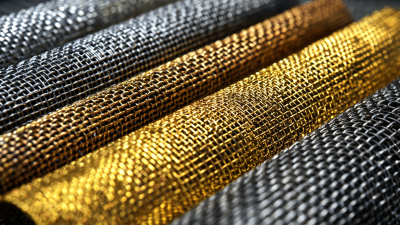
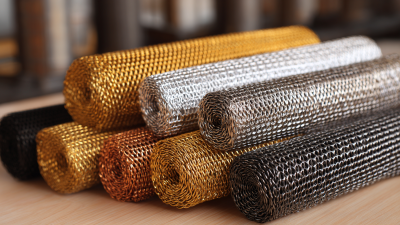
Woven wire mesh uses strands crossing over and under each other. It can provide precise openings for filtering, screening, and ventilation.
Common patterns include plain weave, twill weave, and Dutch weave. Each pattern changes strength, flow, and filtration accuracy. Smaller openings need cleaner handling.
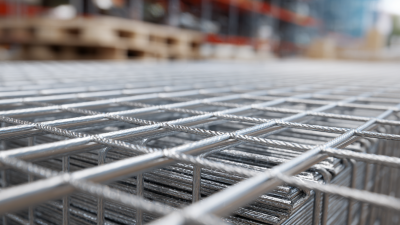
Welded wire mesh joins straight wires at fixed intersections. It offers a stable grid for guards, partitions, racks, and concrete reinforcement.
The welded joints are easy to inspect visually. Expanded metal comes from slitting and stretching one sheet. It creates diamond-shaped openings without loose wires.
This structure is light, rigid, and useful for walkways or protective panels. In practice, sharp edges can remain after cutting. They need proper finishing and careful handling.
Perforated metal uses punched holes in a sheet. Hole size, spacing, and shape control airflow, sound movement, and visual screening. It often feels more solid than woven mesh.
Knitted wire mesh forms flexible loops, making it suitable for seals, vibration control, and mist removal. Material choice also matters.
Stainless steel resists corrosion, while carbon steel usually offers lower initial cost. Aluminum reduces weight but may not suit every load.
I would check the opening size, wire or sheet thickness, load, temperature, and surrounding chemicals before approval. A catalog image is never enough. Real conditions can expose weaknesses.
Metal mesh types differ mainly in how their openings are formed.
Woven wire mesh uses interlaced wires, creating precise square or rectangular apertures. It offers strong filtration control and flexibility, but thin wires may deform under impact.
Welded wire mesh joins wires at fixed intersections. Its rigid grid suits guards, partitions, and concrete reinforcement, although weld points can concentrate stress.
Expanded metal is cut and stretched from one sheet. Its diamond openings provide airflow, slip resistance, and useful stiffness without loose strands.
Perforated sheet uses punched holes, producing cleaner edges and predictable open-area percentages. It often performs better where appearance and directional airflow matter.
Sintered mesh layers woven screens under heat and pressure. This structure supports fine filtration and higher mechanical stability, but cleaning can be more difficult.
A 2024 Grand View Research assessment estimated the global metal mesh market at about USD 6.7 billion in 2023, with continued growth through 2030. The figure reflects broad applications, not equal demand for every mesh type. That distinction matters.
In practice, aperture size, wire diameter, alloy, surface treatment, and loading direction change performance significantly. ASTM E11 testing helps classify sieve openings, while ISO 9044 supports woven wire mesh specifications.
Still, a standard number cannot predict every installation. A mesh exposed to vibration, salt spray, or repeated cleaning may behave differently from a laboratory sample. Selection sometimes needs a small trial panel. That is less elegant, but more reliable.
Metal mesh selection depends on load, airflow, visibility, and corrosion exposure. Woven wire mesh suits filtration, laboratory screens, and food-processing equipment. Its interlocked wires tolerate repeated handling and allow precise openings. Welded wire mesh offers stronger, fixed joints. It commonly appears in concrete reinforcement, machine guards, storage cages, and agricultural fencing. ResearchAndMarkets projects steady growth in the global wire mesh market through 2030, supported by construction, filtration, and industrial equipment demand. The report also highlights stainless steel and galvanized steel as widely used material choices.
Expanded metal provides a rigid, lightweight surface without loose intersections. It is common in walkways, platforms, ventilation covers, and security screens. Perforated metal serves architectural panels, acoustic surfaces, equipment guards, and air-distribution systems. Hole shape and open area affect sound, airflow, and structural strength. The World Steel Association reported about 1.89 billion tonnes of crude steel production in 2023. That figure shows the scale of steel supply, but it does not guarantee suitable mesh quality. In practice, no mesh type is universally best. Designers sometimes prioritize price and overlook cleaning access or edge safety.
Tips: Confirm the opening size, wire diameter, and load rating before ordering. Check corrosion conditions, especially near saltwater or chemical vapors. Request mill certificates and test data when safety matters. A small prototype can reveal installation problems early. It may feel unnecessary, but replacement costs are usually higher.
Choosing the right metal mesh begins with the working environment, not appearance. Common options include woven wire mesh, welded mesh, expanded metal, perforated sheet, and sintered mesh. Woven mesh suits filtration because its openings are precise. Welded mesh offers stronger intersections for guards, cages, and partitions. Expanded metal provides airflow with fewer waste cuts. Perforated metal works well when controlled holes and a rigid surface matter.
Material selection is equally important. Stainless steel resists moisture and many chemicals, while aluminum reduces weight. Carbon steel can be economical, but it usually needs protective treatment outdoors. Define the opening size, wire diameter, load, temperature, and exposure before requesting quotations. A 2024 Grand View Research analysis identifies industrial and construction uses as major drivers of the wire mesh market, with global demand projected to grow at about 5.4% annually through 2030. That growth reflects practical performance needs, not only decoration.
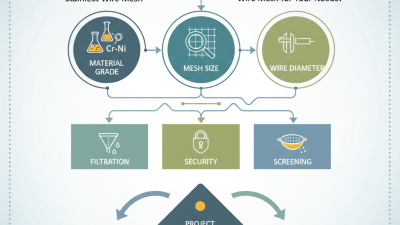
Tips: Ask for a sample and measure its opening with calipers. Check whether the specification refers to aperture size or mesh count. Review corrosion data, weld quality, and allowable tolerance. ASTM or ISO test references can improve comparability between suppliers. Do not select the finest mesh automatically; smaller openings can restrict flow and increase cleaning time. In practice, price-only decisions often fail. A mesh that looks suitable in a catalog may deform, clog, or corrode after installation. Recheck the choice against real operating conditions.
How Should You Choose the Right Metal Mesh? The chart compares representative open-area values for common metal mesh types. Open area affects airflow, visibility, drainage, filtration, and material efficiency.
These percentages represent typical example geometries rather than fixed limits. Choose woven or perforated mesh for controlled filtration, welded mesh for rigid barriers, expanded metal for lightweight screens with strong continuity, and hexagonal mesh for flexible enclosures and reinforcement.