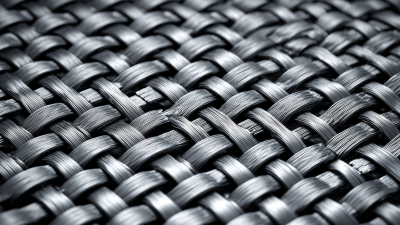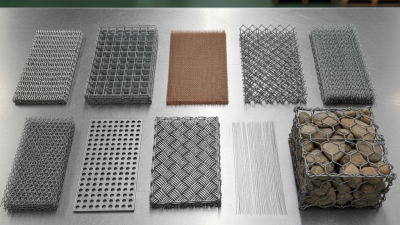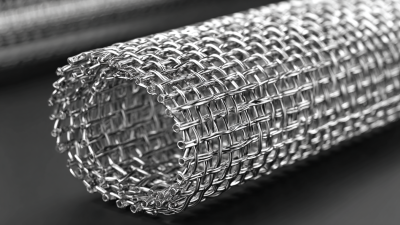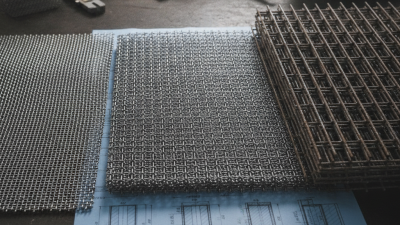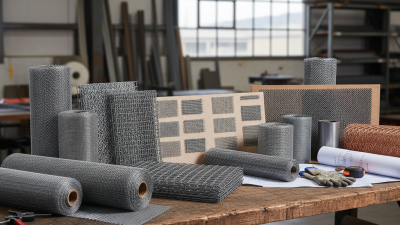

Choosing the right woven wire mesh in 2026 requires more than comparing price, wire diameter, and roll length. A mesh may look identical on a supplier’s screen, yet perform differently under heat, vibration, corrosion, or repeated cleaning. Grand View Research valued the global wire mesh market at approximately USD 6.9 billion in 2022 and projected continued growth through 2030. MarketsandMarkets also identifies filtration, construction, mining, and automotive applications as major demand areas. These figures show expansion, not automatic quality.
“Mesh selection should begin with the operating environment, not the catalog number,” says Dr. George F. Vander Voort, a recognized metallographer and materials specialist. His point is practical. A 100-mesh stainless steel screen may suit fine filtration, while a heavier welded or woven specification may better handle abrasive particles. Check the aperture, open-area percentage, tensile strength, weave pattern, and alloy grade. Then examine temperature, chemical exposure, pressure drop, and cleaning method. Small details matter. A burr can damage a seal. An undersized wire can deform during installation.
Reliable selection also requires evidence. Ask for mill certificates, dimensional tolerances, corrosion data, and test records linked to the actual batch. ASTM and ISO references can improve consistency, but they do not replace application testing. This is where many buying guides become too confident. Laboratory data may not reproduce dust, moisture, impact, or careless handling on a real production line. The better approach is cautious: define the failure risk, test a sample, and review the decision with a qualified engineer. The cheapest woven wire mesh may become the most expensive component after one avoidable shutdown.
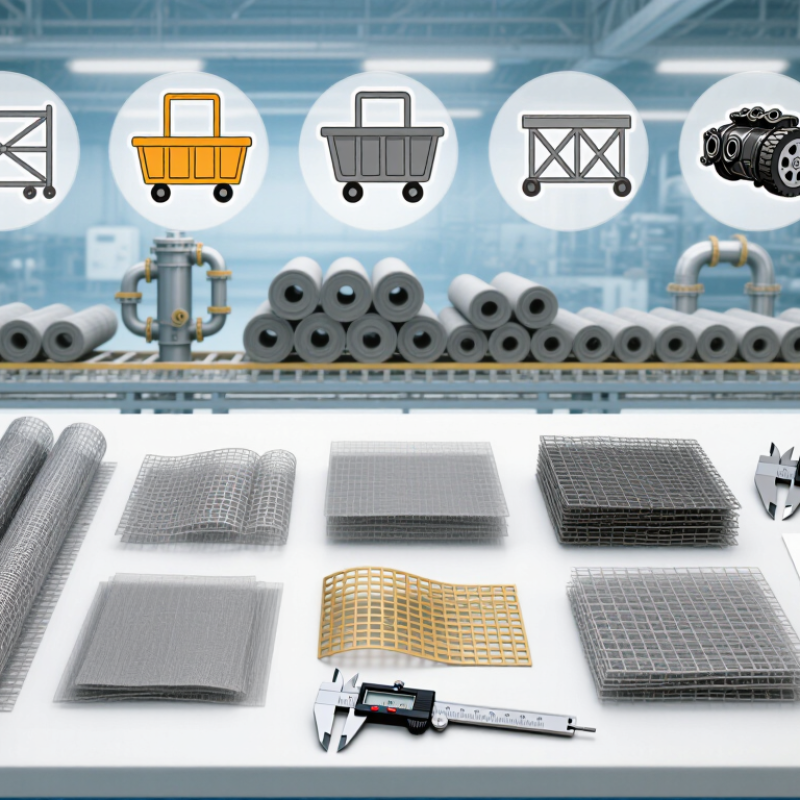
Mesh count describes the number of openings per linear inch, measured from the center of one wire to the next. It is not the same as aperture, the clear space between neighboring wires. Under ISO 9044, woven wire cloth is described using these dimensions alongside wire diameter, helping buyers specify and compare mesh accurately.
Picture a sieve holding dry granules: a larger aperture lets more material pass, while thicker wires can strengthen the cloth but reduce open area. Record aperture and wire diameter in millimetres, and state the mesh count and measurement method. ISO 9044 provides terminology and guidance for describing woven wire cloth; it does not remove the need to confirm tolerances and test conditions with the supplier. Details matter.
A practical check is to measure several openings across the sample, not just one. Weave distortion, wire variation, and measurement tools can affect readings. I have seen specifications focus on mesh count alone; that can leave two samples behaving differently in service. Even careful measurements have limits. Compare the stated values with the intended filtration task and request inspection data for critical applications.
Choosing woven wire mesh starts with the opening size, not the mesh count alone. A 20 μm aperture suits fine separation, while a 125 mm opening handles very coarse material. ASTM E11 sieve sizes offer a useful reference across this range. Check the stated aperture and its tolerance; two meshes described with similar counts may still have different openings because wire diameters vary.
Think about the material being screened. Fine powder can cling to wires, while damp grains may bridge across openings. A clear aperture measurement helps, but it cannot predict every performance issue. Real powders misbehave. Compare the required separation point with the nearest ASTM E11 designation, then confirm whether the specification refers to nominal opening size or a verified sieve cloth size. That small distinction matters.
Wire thickness also affects open area, strength, and flow. A thinner wire can provide more open area, but may not suit rough handling. A thicker wire may last longer, yet slow screening. There is no perfect chart for every process. Test a small sample under actual conditions, and record the mesh opening, wire diameter, and test method. If results drift, inspect for blocked or damaged wires before changing the aperture.
Open area describes how much of a woven screen is available for airflow, drainage, or particle passage. For square openings, estimate it with (A ÷ (A + d))², where A is the clear aperture and d is the wire diameter. Keep both measurements in the same units. For example, a 1.0 mm opening with 0.25 mm wire gives (1.0 ÷ 1.25)², or 64 percent open area.
That number matters. A larger opening or thinner wire generally increases the open area, but it can reduce support for delicate parts or screening accuracy. A calculation is a useful starting point, not a promise. Woven wires may curve around each other, and actual dimensions can vary slightly from nominal values. Check a sample with calipers when the result is critical.
Match the calculated area to the job. A screen for moving water may benefit from lower flow resistance, while a fine sizing screen may need smaller, consistent apertures. Compare the stated wire diameter and aperture, then ask whether the supplier reports calculated or measured open area. Small differences count. The formula assumes regular square openings; unusual weave patterns need a different approach. Even experienced buyers sometimes overlook that detail.
Open area is calculated using the engineering formula: Open Area (%) = (A ÷ (A + d))² × 100, where A is the clear aperture and d is the wire diameter. All dimensions use millimetres.
A larger aperture relative to the wire diameter generally provides a higher open area, improving flow and screening capacity. Select the mesh according to the required particle retention, strength, and open-area performance.
How to Choose the Right Woven Wire Mesh in 2026?
The right alloy depends on moisture, chemicals, temperature, abrasion, and cleaning methods. SS 304 is a dependable choice for general indoor use and moderate humidity. It suits filtration, guards, food-handling areas, and architectural panels when chlorides remain low. SS 316 performs better near seawater, salt spray, and chloride-bearing chemicals. Its molybdenum content improves resistance to localized corrosion. Still, it is not immune to damage.
Carbon steel provides high strength and practical cost control. It works well in dry equipment, heavy screening, and applications with protective coatings. Unprotected carbon steel can rust quickly in condensation. Brass offers useful conductivity, easy forming, and a warm appearance. It may fit electrical screens, low-friction parts, and decorative mesh. However, certain waters and chemicals can cause dezincification. Check the service fluid.
A practical selection review starts with actual site conditions. Record pH, chloride levels, operating temperature, and cleaning chemicals. Note whether the mesh faces impact, vibration, or repeated bending. A common mistake is choosing corrosion resistance alone. Aperture size, wire diameter, weave type, and load capacity also affect performance. Ask for material certificates and verify the weave before installation. Short exposure trials can reveal staining or brittleness. The first choice may need revision. That is useful information, not failure. Examine cut edges, fasteners, and contact with dissimilar metals, since small details often create unexpected corrosion.
2026 How to Choose the Right Woven Wire Mesh?
Choosing woven wire mesh starts with verified tolerances, not appearance. Confirm aperture size, wire diameter, mesh count, flatness, and edge condition. ASTM E11-24 provides sieve-cloth tolerances, while ISO 9044 addresses industrial woven wire cloth. However, a sieve tolerance cannot automatically govern a guard panel. Fit the test.
Request a material certificate before purchase. EN 10204 Type 3.1 documentation can identify the heat number, chemical composition, tensile properties, and coating details. Certificates are evidence. Check that the certificate matches the delivered coil or panel, not only the quotation. The World Steel Association reported 1,888 million tonnes of crude steel production in 2023. Such scale makes traceability more than paperwork.
Define the real load case. State the support span, fixing method, impact risk, point load, distributed load, temperature, and required safety factor. Ask for calculations using the actual wire diameter and open area. A heavier wire may still fail if the frame twists. I have seen specifications that looked precise but ignored fastener spacing. That mistake is easy to repeat. Test a sample when vibration, falling objects, or human contact matters. A small tolerance error can change aperture performance and reduce confidence in the final installation.
| Check Before Purchase | What to Specify | Example or Verification Method | Acceptance Guidance |
|---|---|---|---|
| Mesh opening | Clear opening size, measurement direction, and required tolerance. | Example: square opening of 1.00 mm. Measure openings at multiple locations with a calibrated optical measuring system or suitable microscope. | State the nominal opening and tolerance on the purchase specification. Do not assume one universal tolerance applies to every weave, material, or supplier. |
| Wire diameter | Nominal wire diameter and permitted variation. | Example: 0.50 mm wire. Check representative warp and weft wires using a calibrated micrometer, accounting for the measurement method and wire condition. | Record the required diameter tolerance in the purchase order and verify it against the agreed specification. |
| Mesh count and weave | Mesh count, weave pattern, and whether the count is measured per unit length. | For a regular square plain weave with a 1.00 mm opening and 0.50 mm wire, the nominal pitch is 1.50 mm, equivalent to about 16.9 openings per inch. | Confirm mesh count together with opening and wire diameter; mesh count alone does not fully define the cloth. |
| Open area | Required percentage of the sheet area that is open, if relevant to flow, screening, or filtration. | For an ideal square weave, open area = [opening ÷ (opening + wire diameter)]² × 100. With 1.00 mm openings and 0.50 mm wire, the calculated open area is about 44.4%. | Treat the calculation as a geometric estimate. Confirm the specified method and any applicable measurement requirements for the product. |
| Dimensional tolerances | Permitted variation for opening, wire diameter, width, length, flatness, and edge condition, as applicable. | Check the order drawing and purchase specification against the delivered roll or cut panels using calibrated measuring equipment. | Agree tolerances in writing before production. Refer to an applicable standard, such as ISO 9044 for industrial woven wire cloth, where appropriate, and identify the edition and deviations. |
| Material and corrosion resistance | Material designation, condition, coating or finish, and service environment. | Compare the material designation on the order with the inspection or material documentation. Use a suitable material identification method where the application requires it. | Specify the exact material and finish rather than relying on a general description such as “stainless” or “corrosion resistant.” Check compatibility with temperature, chemicals, and cleaning conditions. |
| Test certificates and traceability | Required certificate type, lot or heat identification, inspection results, and traceability details. | Request documentation that identifies the supplied material and links test or inspection results to the delivered batch. Where applicable, specify an EN 10204 inspection document type, such as 3.1, in the order. | Review certificate scope and batch references before release. A certificate does not replace dimensional inspection unless the required measurements and results are included. |
| Load and operating conditions | Maximum working load, support spacing, loading direction, temperature, vibration, and expected service life. | Provide the design load and installation details. Ask for calculations or testing that match the actual panel size, supports, edge attachment, and loading conditions. | Do not infer a safe load from mesh opening or wire diameter alone. Obtain application-specific engineering verification and define any safety factor or deflection limit with the responsible engineer. |
| Inspection and sampling | Inspection points, sampling frequency, test method, and treatment of nonconforming material. | Agree whether checks cover each roll, each production lot, or a defined sample. Record measured values and instrument calibration status. | Set the inspection and acceptance plan before purchase; do not rely on undocumented visual checks for critical dimensions. |
Note: Numerical mesh values above are illustrative geometry examples, not universal product tolerances or load ratings. Confirm the final requirements, applicable standard, test method, and acceptance limits in the purchase specification.