


What Is an Electrical Cable and Which Type Do You Need?
An electrical cable carries electrical power or signals from one point to another. It may sit behind a wall, run beneath a machine, or cross a workshop floor. Inside, conductive cores usually contain copper or aluminium. Insulation surrounds them and helps control heat, moisture, and accidental contact. The outer jacket adds another layer of protection.
Choosing the right cable depends on more than appearance. Voltage, current, circuit length, installation location, and temperature all matter. A cable for indoor lighting may fail outdoors under sunlight and rain. A flexible cable may suit a moving appliance, while a heavy-duty armoured cable may protect wiring in demanding environments. Cable size also affects voltage drop. A long, thin cable can make equipment run poorly or overheat. That detail is easy to miss.
I have found that people often choose cables by matching labels alone. That approach feels convenient, but it can be unreliable. Product markings, manufacturer data, and local electrical requirements deserve careful checking. Qualified electricians can assess loads, protective devices, earthing, and installation methods more accurately. Even experienced users can overlook one factor. This guide explains common cable types, their practical uses, and the conditions each type must handle. It will also show where simple advice stops being sufficient. If the application involves high power, hidden wiring, wet areas, or unfamiliar equipment, professional assessment is the safer choice. Small decisions matter. A suitable electrical cable supports efficient operation, reduces avoidable hazards, and helps an installation remain dependable over time.
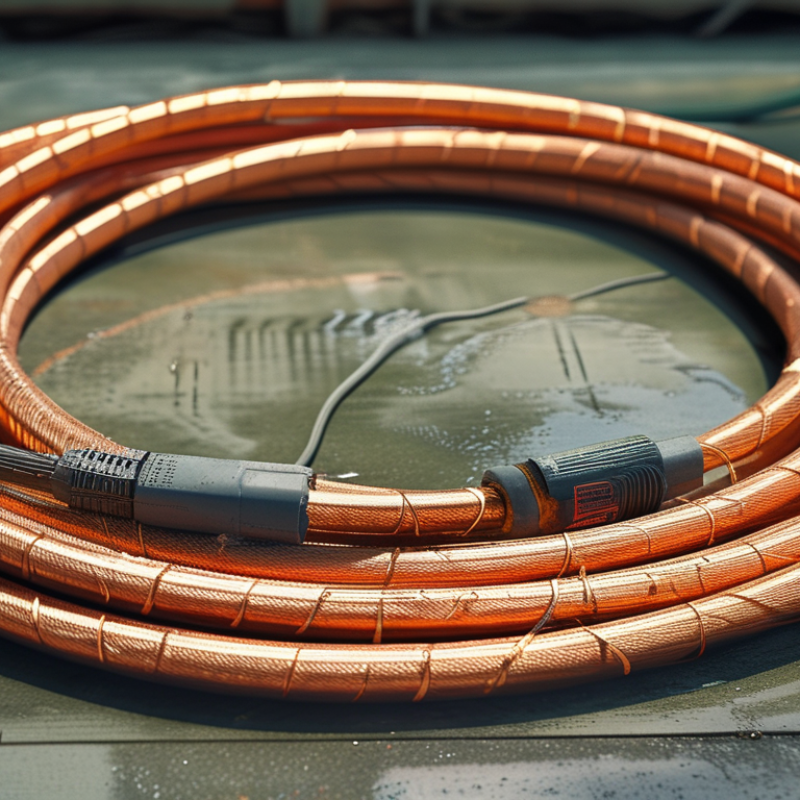
What Is an Electrical Cable?
What Is an Electrical Cable?
An electrical cable is a protected path for carrying power, signals, or data. It usually contains one or more conductive cores, often made from copper or aluminum. Insulation surrounds each core and helps prevent unwanted contact. An outer sheath may add protection against moisture, abrasion, heat, or chemicals. Some cables are flexible for portable equipment. Others are rigid and designed for fixed installation. Their construction depends on voltage, current, location, and expected movement. A cable is not simply a wire with a thicker jacket. That assumption can cause expensive mistakes.
Tips: Check the cable’s voltage and current ratings before installation. Measure the route carefully, including bends and connection points. Look for clear markings on the insulation. They can show size, temperature rating, and intended use. Never choose a cable by appearance alone. A small cable may overheat under heavy load. Ask a qualified electrician when the installation involves mains power, damp areas, buried routes, or unusual equipment.
A suitable cable must match its environment as well as its electrical demand. Outdoor cables may need stronger weather protection. Cables near machinery may require extra resistance to movement and impact. Flexible cables also have limits; repeated bending can damage internal conductors. I would not treat “more insulation” as automatically safer. Compatibility matters more. The connector, terminal, fuse, and installation method must work together. Cable selection is sometimes less obvious than expected, and checking the manufacturer’s technical data is a sensible step.
| Common Cable Type | What It Is | Typical Voltage Rating | Typical Temperature Rating | Suitable Locations | Common Applications | Main Advantages | Important Limitations |
|---|---|---|---|---|---|---|---|
| Electrical Cable | An assembly containing two or more insulated conductors, or one insulated conductor with a metallic or nonmetallic protective covering. | Depends on the cable construction and its listing; many building cables are rated up to 600 V. | Depends on the insulation type, installation conditions, and applicable code. | Selected according to whether the installation is dry, damp, wet, exposed, buried, or enclosed. | Power distribution, branch circuits, equipment connections, lighting, and control systems. | Combines conductors and protection in one manufactured assembly. | The cable must be selected for voltage, ampacity, temperature, mechanical protection, moisture exposure, and local electrical requirements. |
| Common Power and Building Cable Options | |||||||
| Nonmetallic-Sheathed Cable (NM-B) |
Multiple insulated copper or aluminum conductors enclosed in a flexible nonmetallic jacket, normally including a grounding conductor. | Commonly 600 V | Conductors are commonly rated 90°C for dry-location use; allowable ampacity may be limited by the applicable code and equipment terminations. | Dry interior locations where the cable is protected from physical damage. | Residential and light-commercial branch circuits, receptacles, lighting, and small equipment. | Lightweight, flexible, easy to install, and combines several conductors in one jacket. | Generally not suitable for wet locations, direct burial, or areas subject to significant physical damage unless specifically permitted and protected. |
| Underground Feeder Cable (UF-B) |
A moisture-resistant nonmetallic-sheathed cable designed for feeders and branch circuits, with insulated conductors and a grounding conductor. | Commonly 600 V | Conductors are commonly rated 90°C in dry locations and 75°C in wet locations, subject to the cable listing and installation rules. | Wet locations and direct burial when installed at the required depth and protected as required. | Outdoor circuits, detached structures, landscape equipment, and underground feeders. | Can serve many outdoor and underground applications without installing individual conductors in a raceway. | Stiffer and harder to strip or bend than standard interior nonmetallic-sheathed cable; burial depth and physical-protection rules still apply. |
| Metal-Clad Cable (MC) |
Insulated conductors enclosed in a continuous interlocked metal armor that provides mechanical protection; a grounding path is included according to the cable construction. | Commonly 600 V | Often uses conductors rated 90°C, but the exact rating depends on the cable and termination requirements. | Many indoor commercial and industrial locations; wet-location use requires a cable specifically listed for that purpose. | Commercial branch circuits, feeders, exposed wiring, and installations requiring added mechanical protection. | Durable armor, good protection against impact, and reduced need for a separate raceway in permitted installations. | Heavier and less flexible than nonmetallic cable; armor bonding, fittings, support, and grounding must be installed correctly. |
| Armored Cable (Type AC) |
Insulated conductors protected by a metal armor system, typically with an internal bonding means that supports grounding requirements. | Commonly 600 V | Varies by conductor insulation and cable listing. | Primarily dry interior locations where the cable is permitted and protected from unsuitable environmental conditions. | Interior branch circuits, lighting, and wiring in areas requiring a metal protective covering. | Provides mechanical protection and can be useful where a metal wiring method is required. | Not automatically suitable for wet, corrosive, or direct-burial locations; compatible fittings and correct bonding are essential. |
| Tray Cable (TC) |
A multiconductor cable designed for installation in cable trays and certain approved industrial wiring methods. | Commonly 600 V; some constructions are rated higher. | Varies by insulation and listing; many industrial types use 90°C-rated conductors. | Industrial facilities, cable trays, raceways, and other locations specifically permitted by the cable listing. | Control circuits, motor circuits, industrial feeders, and equipment interconnections. | Efficient for organized industrial cable-tray systems and available in many conductor configurations. | Installation permissions vary; sunlight, wet-location, direct-burial, and vertical-support ratings must be checked for the exact cable. |
| Portable Cord (Flexible Cord) |
Highly flexible cable made with fine-stranded conductors and a flexible insulating jacket. | Varies by cord type; many common types are rated 300 V or 600 V. | Varies by insulation and cord type. | Temporary or portable connections, subject to the cord listing and environmental rating. | Power tools, appliances, extension cords, portable equipment, and movable machinery. | Very flexible and suitable for repeated movement. | Not a general substitute for permanent building wiring; must not be concealed in walls or used where the applicable code prohibits it. |
| Low-Voltage and Communication Cable Options | |||||||
| Coaxial Cable | A cable with a central conductor, dielectric insulation, metallic shield, and outer jacket arranged around a common axis. | Usually used for signal systems rather than premises power circuits; rating depends on the cable construction. | Depends on the jacket and insulation materials. | Indoor or outdoor locations when the jacket and listing permit the environment. | Radio-frequency signals, video distribution, antennas, and broadband communication systems. | Good shielding and controlled impedance for high-frequency signals. | Not intended to supply ordinary building loads; bend radius, connector compatibility, and signal-frequency requirements matter. |
| Twisted-Pair Data Cable | Pairs of insulated conductors twisted together to reduce electromagnetic interference and signal crosstalk. | Designed for data and communication signals rather than standard power distribution. | Depends on the cable jacket and installation rating. | Indoor plenum, riser, general-purpose, or outdoor locations only when the specific jacket is listed for that use. | Ethernet networks, telephone systems, data links, and building automation. | Reduces interference and supports structured communication cabling. | Cannot replace power wiring; cable category, termination quality, separation from power circuits, and fire-rating requirements are important. |
| Fiber-Optic Cable | Contains glass or plastic optical fibers that transmit information as light rather than electrical current. | Not normally rated for electrical power transmission. | Depends on the fiber construction and jacket rating. | Indoor, outdoor, aerial, duct, or direct-burial locations when specifically listed. | Data networks, telecommunications, long-distance communication, and electrically isolated links. | High bandwidth, long transmission distance, and immunity to electromagnetic interference. | Does not carry ordinary electrical power; installation requires attention to pulling tension, bend radius, splicing, and connector cleanliness. |
| Selection Factors to Check Before Purchasing or Installing a Cable | |||||||
| Voltage and Ampacity | Choose a cable with a voltage rating at least equal to the system voltage. Determine conductor ampacity from the load, conductor material and size, ambient temperature, number of current-carrying conductors, installation method, and applicable electrical code. Do not select cable size from conductor gauge alone. | ||||||
| Environment | Confirm whether the cable will be installed indoors, outdoors, underground, in a wet or damp location, in sunlight, in a corrosive area, in a plenum or riser space, or where it may be exposed to impact, oil, heat, or chemicals. | ||||||
| Conductor Material | Copper is commonly chosen for its conductivity and ease of termination. Aluminum can be suitable for certain feeders and larger conductors when the cable, terminals, connectors, and installation method are specifically rated for aluminum conductors. | ||||||
| Installation Method | Check whether the cable will be placed in a wall, raceway, cable tray, conduit, ceiling space, trench, or exposed area. Support spacing, bend radius, burial depth, physical protection, and permitted cable types vary by installation method. | ||||||
| Safety Reminder | Cable selection and installation should comply with the electrical code and inspection requirements applicable to the location. De-energize circuits before work, verify the absence of voltage, and use a qualified electrical professional when the circuit or installation is unfamiliar. | ||||||
Related Posts
-
Top Tips for Choosing the Right Wire Cable for Your Needs?
-
What is an Electrical Cable and How to Choose the Right One?
-

10 Essential Tips for Choosing the Right Metal Wire Mesh for Your Project
-
2026 Best Metal Mesh Solutions for Global Buyers?
-
Best Woven Mesh Options for Global Buyers in 2026?
-
2025 Top 5 Fine Metal Mesh Products for Enhanced Performance and Durability