


7 Tips for Choosing the Right Stainless Valve Stem?
Choosing the right Stainless Valve Stem is a small decision with serious operational consequences. Inside a chemical line, the stem may face moisture, pressure, heat, friction, and aggressive media every day. A polished surface can still fail if its alloy, hardness, or sealing design is unsuitable.
Industry data shows why careful selection matters. Grand View Research valued the global industrial valves market at approximately USD 78.7 billion in 2023, with continued growth expected through 2030. The International Stainless Steel Forum also reports sustained global stainless steel production, reflecting broad demand for corrosion-resistant components. These figures indicate a competitive market, but they do not guarantee product quality.
Material compatibility remains central.
As corrosion specialist R. Winston Revie states, “Corrosion is the deterioration of a material, usually a metal, that results from a reaction with its environment.” This principle applies directly to valve stems exposed to chlorides, acids, steam, or outdoor humidity. A cheaper stem may look acceptable during installation, then develop galling, pitting, or leakage months later.
This guide presents seven practical tips for evaluating a Stainless Valve Stem. It considers grade selection, dimensional accuracy, surface finish, operating temperature, pressure conditions, sealing compatibility, and supplier traceability. Real-world details matter, including thread smoothness, stem straightness, and visible machining marks.
No checklist is perfect.
Engineers should verify assumptions against the actual fluid, duty cycle, and maintenance history. Even experienced buyers can overlook one variable. A reliable decision combines published test data, recognized standards, inspection records, and field experience.
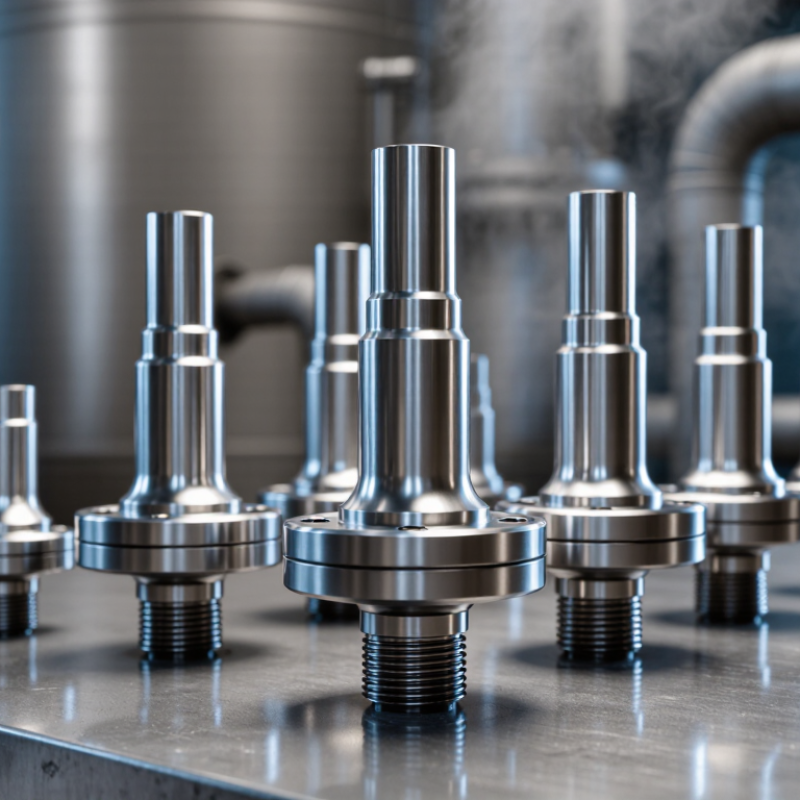
Define the Valve Stem’s Role in a Stainless Valve System
In a stainless valve system, the stem transfers actuator force to the closure element. It controls opening, throttling, and shutoff. A small stem can carry serious responsibility. I have seen valves fail because the stem was treated as a simple metal rod. It is a precision component.
Choose the stem by checking seven practical points. Match its diameter to pressure and torque requirements. Confirm the temperature range before selecting the material. Consider whether the fluid causes pitting, galling, or chemical attack. Check the stem’s connection with the handle or actuator. Review its travel length and alignment. Inspect the sealing arrangement around the stem. Finally, verify surface finish and maintenance access. A rough stem may damage packing during repeated movement.
The valve body and stem must work as one system. A strong body cannot compensate for poor stem design. For wet environments, corrosion resistance matters near threads, packing areas, and exposed surfaces. In high-cycle service, smooth movement reduces friction and actuator wear. Measure the existing stem carefully, including diameter, length, thread form, and shoulder position. Small errors create leaks. I once underestimated clearance around a stem nut, which made routine servicing unnecessarily difficult. That detail deserves more attention than it usually receives. Choose documented material grades and inspect certificates when service conditions are demanding.
7 Tips for Choosing the Right Stainless Valve Stem? - Define the Valve Stem’s Role in a Stainless Valve System
| Tip | Selection Focus | Valve Stem Role | Recommended Criteria | Why It Matters | Practical Check |
|---|---|---|---|---|---|
| 1 | Define the stem function | The stem transfers actuator or handwheel movement to the valve closure element, such as a ball, disc, plug, or gate. | Confirm whether the design requires a rising stem, non-rising stem, rotary stem, or linear-travel stem. | A correct stem arrangement ensures the required direction and amount of movement during opening and closing. | Match the stem type with the valve design and actuator output. |
| 2 | Select the stainless steel grade | The stem provides the mechanical connection between the operating mechanism and the closure element. | Use austenitic stainless steel such as 304 or 316 for general corrosion resistance; consider a precipitation-hardening grade when higher strength is specified. | Grade selection affects corrosion resistance, strength, wear behavior, and compatibility with the process fluid. | Review the fluid chemistry, temperature, chloride exposure, and required mechanical properties. |
| 3 | Check corrosion exposure | The stem may be exposed to the process medium, atmosphere, cleaning chemicals, or moisture near the packing area. | For chloride-containing or marine environments, evaluate pitting and crevice-corrosion resistance rather than relying only on the word “stainless.” | Localized corrosion can increase friction, damage sealing surfaces, and restrict stem movement. | Compare the material against the process-fluid compatibility data and cleaning procedure. |
| 4 | Verify strength and torque capacity | The stem transmits torque or thrust while resisting bending, twisting, and deformation. | Check stem diameter, effective length, actuator torque, breakaway torque, operating frequency, and any applicable safety factor. | An undersized or poorly supported stem may twist, buckle, or fail to fully operate the valve. | Confirm that the stem rating exceeds the maximum calculated operating load. |
| 5 | Evaluate surface finish and hardness | The stem surface moves through packing, bushings, or bearings and must support smooth, repeatable operation. | Specify a smooth, burr-free sealing surface and suitable hardness for the packing and bearing arrangement. | Appropriate finish reduces friction, leakage risk, galling, and premature wear at contact points. | Inspect the sealing area for scratches, pits, sharp edges, and machining defects. |
| 6 | Confirm sealing and emission control | The stem passes through or interfaces with the valve body, so the stem-and-packing assembly helps prevent external leakage. | Check packing material, packing compression, stem geometry, temperature range, and any fugitive-emission requirements. | Even a corrosion-resistant stem cannot compensate for unsuitable packing or poor stem alignment. | Verify packing compatibility and conduct the specified pressure or leakage test. |
| 7 | Validate dimensions and maintenance needs | The stem must fit the valve body, closure element, actuator connection, guides, and sealing components as one operating system. | Confirm stem length, diameter, key or spline details, thread form, tolerances, travel, and replacement-part compatibility. | Accurate dimensional control prevents misalignment, excess friction, incomplete closure, and difficult maintenance. | Use engineering drawings, inspection records, material certificates, and functional testing before installation. |
Selection principle: The best stainless valve stem is not chosen by material grade alone. It must combine corrosion resistance, mechanical capacity, sealing performance, dimensional compatibility, and reliable movement within the complete valve system.